Recently, Chainlink introduced Fulcrum, a solution for institutional financing and collateral management across public and private blockchains.
Fulcrum targets the repurchase agreement market, which averages $12.6 trillion in daily exposure in the U.S. and €15 trillion in Europe, over $30 trillion on a worldwide scale. Even a small share of repo activity moving onchain would represent significant financial volume.
The repo mechanism requires complex financial, regulatory, and coordination infrastructure to work as it traditionally has. Chainlink Fulcrum gives institutions exactly what they need to start using their digital assets in the same manner that generates trillions in daily volume in traditional finance.
Understanding the $30 Trillion Repo Market
A repurchase agreement, or repo, is a transaction in which one institution sells securities to another and agrees to buy them back later at a slightly higher price, usually the next day.
In a nutshell, a repo is a secured pawn shop loan for institutions. It's used extensively: $30 trillion in outstanding exposure means that banks and funds trade trillions every day. Central banks use repo and reverse repo as primary tools to control the supply of bank reserves by borrowing or lending money to banks.
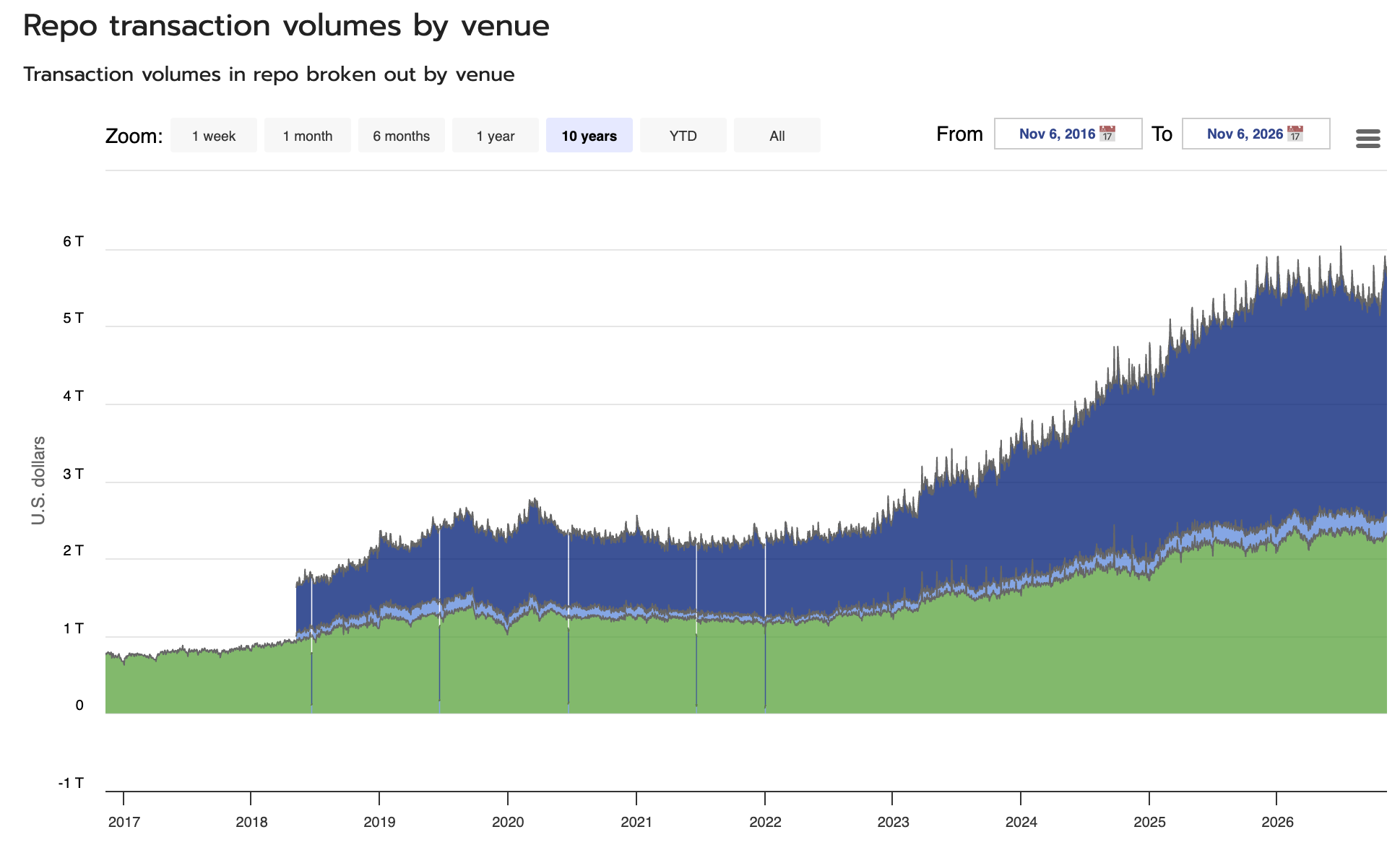
The repo market is so big for several reasons:
- Loans are backed by high-grade assets, like U.S. Treasuries.
- There's plenty of liquidity, as banks, corporations, and institutions deploy idle cash and assets there for low-risk returns.
- Active traders and hedge funds constantly borrow cash to amplify their positions.
- Central banks use repo to inject or drain liquidity and influence interest rates.
The repo market was founded in the 1910s to finance government debt and remained largely unchanged for sixty years. Only in the 1970s were corporations and institutions allowed to participate by providing short-term loans in exchange for safe overnight yields. After financial crises, it gained more and more guardrails and protective measures until it became the T+1, automated, tri-party clearing-powered anchor for short-term money markets.
How Does Chainlink Fulcrum Relate to the Repo Market?
Institutions use securities and other assets they hold to get loans in the repo market. But those securities can be held by different custodians, registered on different ledgers, and subject to different settlement schedules, making the process too complicated.
According to Citi's estimates, 25% of institutional collateral sits idle because of this. The average Tier 1 firm misses out on ~$350M in revenue, and markets miss out on trillions in liquidity because firms can't deploy all the capital they want to.
A similar situation exists in the crypto space. In 2026, many institutions hold crypto assets, stablecoins, and tokenized real-world assets. They sit idle too, as modern-style repos aren't possible without proper infrastructure to verify collateral ownership, determine its value, coordinate settlement, and monitor repayment.
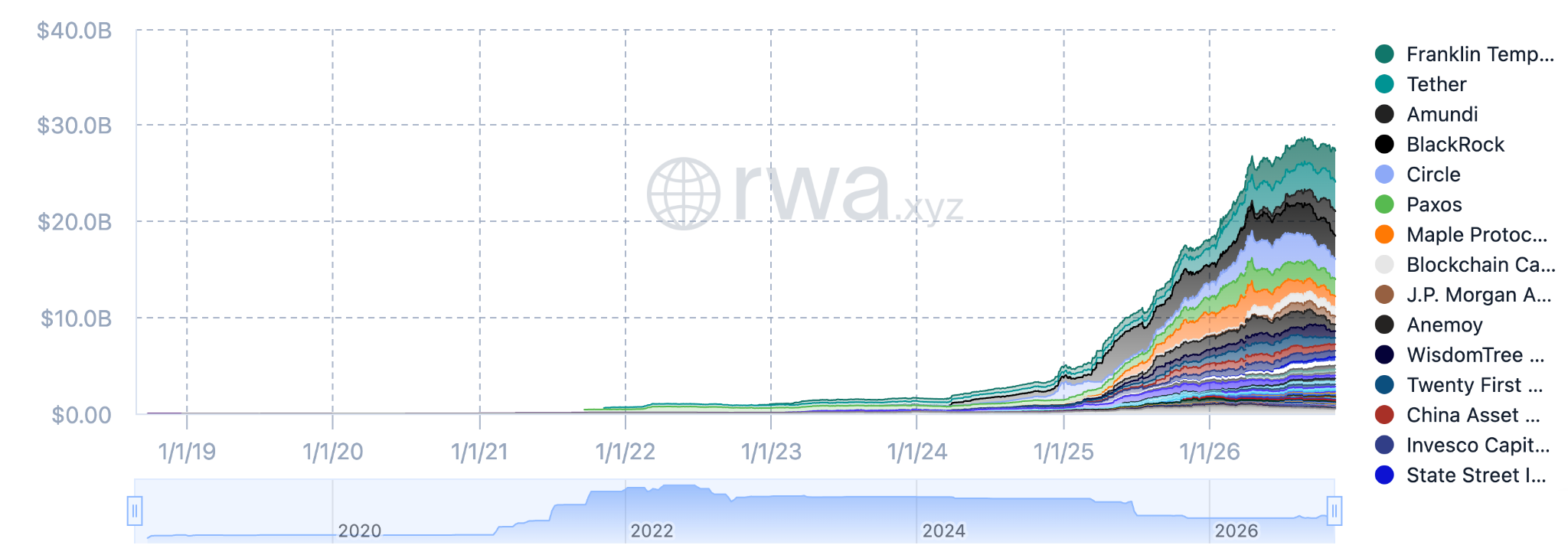
Chainlink Fulcrum aims to solve this by providing them with ready-to-use infrastructure to execute repo transactions across supported blockchains and with supported assets.
Fulcrum combines three existing Chainlink services:
- Chainlink Runtime Environment (CRE) to coordinate the financing workflow, including agreements, collateral verification, and settlement instructions.
- Cross-Chain Interoperability Protocol (CCIP) to enable communication and asset transfers between the blockchains involved.
- Chainlink Data Streams to provide market prices and other information used to value collateral and determine risk adjustments.
Fulcrum also supports agreed financing restrictions, including prohibitions on rehypothecation (lending the borrowed asset), and 24/7 monitoring of changing collateral exposures.
Almost forgot the main feature of Fulcrum: it's cross-chain. Institutions can settle a repo trade even if they both hold their assets on private ledgers and don't want to move them to any intermediary ledger or blockchain.
How Fulcrum Could Participate in Executing a Repo Trade
Imagine Bank A holds tokenized Treasury bonds on its private distributed ledger, while Fund B holds stablecoins on the Ethereum blockchain. To execute a repo transaction, they'd need to invent a trading system, a settlement system, a collateral management system, and a cross-chain communication system, and integrate those with each other and with custodians. They would also need accurate pricing data, databases to track trades and balances, smart contracts for settlement, and many KYC/AML checks before each transaction.
Fulcrum brings financial institutions all of the above in one package, except the financial venue.
Bank A asks for a loan on a financial venue connected to Fulcrum. Fund B sees the offer and agrees to it. Then:
- Chainlink Data Streams verify the value of Bank A's collateral.
- Chainlink CRE coordinates checks to determine whether Bank A's assets satisfy the repo agreement conditions.
- Chainlink CCIP connects Bank A's private ledger with blockchain, where Fund B holds its stablecoins.
- Chainlink CCIP executes stablecoin transfer to Bank A and sends the collateral to Bank B.
- Chainlink CRE keeps monitoring collateral value to trigger a margin call if needed.
- After repayment, CCIP helps to transfers stablecoins back and Chainlink CRE verifies that Bank A has fully repaid the loan.
- Chainlink CRE coordinates the return of the collateral through CCIP.
- Chainlink CRE verifies that the repo was completed and notifies the financial venue.
However, Fulcrum is only infrastructure that can be used by financial venues, custodians, and institutions. It does not provide trading and borrowing services by itself.
Potential Fulcrum Applications Beyond Repos
Fulcrum is initially focused on repos, but other collateralized transactions are also possible with it:
- Long-term securities lending. Repos are famous for overnight loans, but a trading venue with Fulcrum underneath can settle loans for any period of time with all the necessary checks and guardrails.
- Hedge fund financing. Instead of selling their assets, hedge funds can obtain financing by using their portfolios as collateral.
- Collateral substitution. It's a common practice among institutions that involves replacing assets already used as collateral with other assets that meet the agreement's requirements.
Apart from repos, Chainlink Fulcrum is a full-fledged infrastructure for safe loans and yields on idle assets for institutions.
How Are Fulcrum-Powered Repos Different From DeFi Lending?
DeFi lending is lending: a borrower provides collateral to a pool and withdraws some assets. Repo trades are loans disguised as trades: a borrower sells collateral to a lender with an agreement to buy it all back at a slightly higher price.
This underlying mechanism creates more differences:
- In DeFi, loans are overcollateralized. Repos have much lower LTV ratios, just enough to cover potential liquidation.
- DeFi lending relies on two-asset liquidity pools. With repos, parties agree on the assets to use for each trade.
- Lending protocols calculate rates based on supply and demand at the moment. In repo trades, parties can negotiate the exact terms of the agreement.
- DeFi relies on smart contracts. Repo trades also rely on legal arrangements, making them safer.
So, repo is another way of lending, with its pros and cons.
Why Fulcrum Arrives at an Interesting Time for RWAs
Many cases go unnoticed, but institutions are actively experimenting with tokenization.
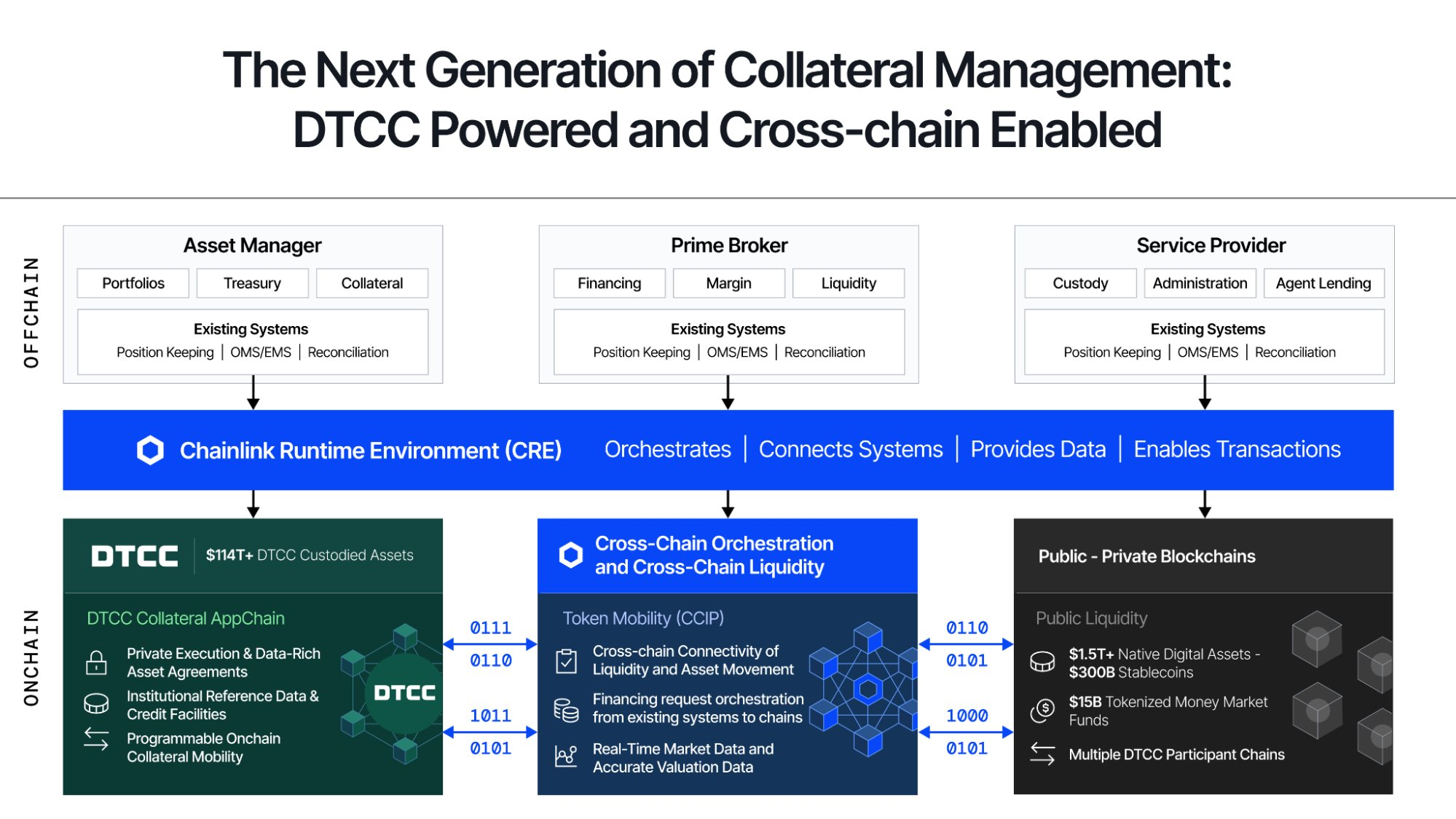
Goldman Sachs, Citi, and other banks launched a $270M stablecoin initiative. Bottomline integrated USDC into its enterprise payments. PNC Bank launched USDC payments for corporate clients. Morgan Stanley tokenized U.S. stocks and Treasuries through DTCC. These all happened this week, with many more cases before. Currently, the value of tokenized assets sits at the $40 billion mark.
Institutions are tokenizing more assets, and they'll want some way to utilize them. Here comes Chainlink Fulcrum, offering them full-fledged infrastructure for one of their favorite financial instruments.
Conclusions
Chainlink Fulcrum is still early, but it's arriving just in time to provide pioneers with everything they need to build a financial venue for tokenized asset repo trades among the largest institutions.
Institutions see opportunities in digital assets, especially in cross-border operations. It's obvious that after bringing their assets into the digital space, they'd want instruments to utilize those assets. Chainlink clearly sees the direction and is just getting ahead.