


At Deepbase, we continuously explore and analyze blockchain technologies that define the next phase of decentralized infrastructure. Today, we are focusing on the Chainlink Cross-Chain Token Standard or CCT.
What is the Cross-Chain Token Standard
The Cross-Chain Token (CCT) Standard is a framework introduced by Chainlink to make token transfers between blockchains simpler, safer, and fully decentralized. It operates through Chainlink’s Cross-Chain Interoperability Protocol (CCIP), which connects multiple networks under a standardized system.
Before CCTs, enabling a token for cross-chain use was a manual, time-consuming process. Developers had to deploy and configure token pools on every target network, often relying on intermediaries or bridges. CCT changes that by providing a self-service interface where token developers can deploy, configure, and manage cross-chain token operations directly through CCIP. This makes interoperability faster, more secure, and fully under the project’s control.
Cross-Chain Tokens Usage Data in 2025
Currently, 192 tokens use the CCT standard to work on 67 networks.
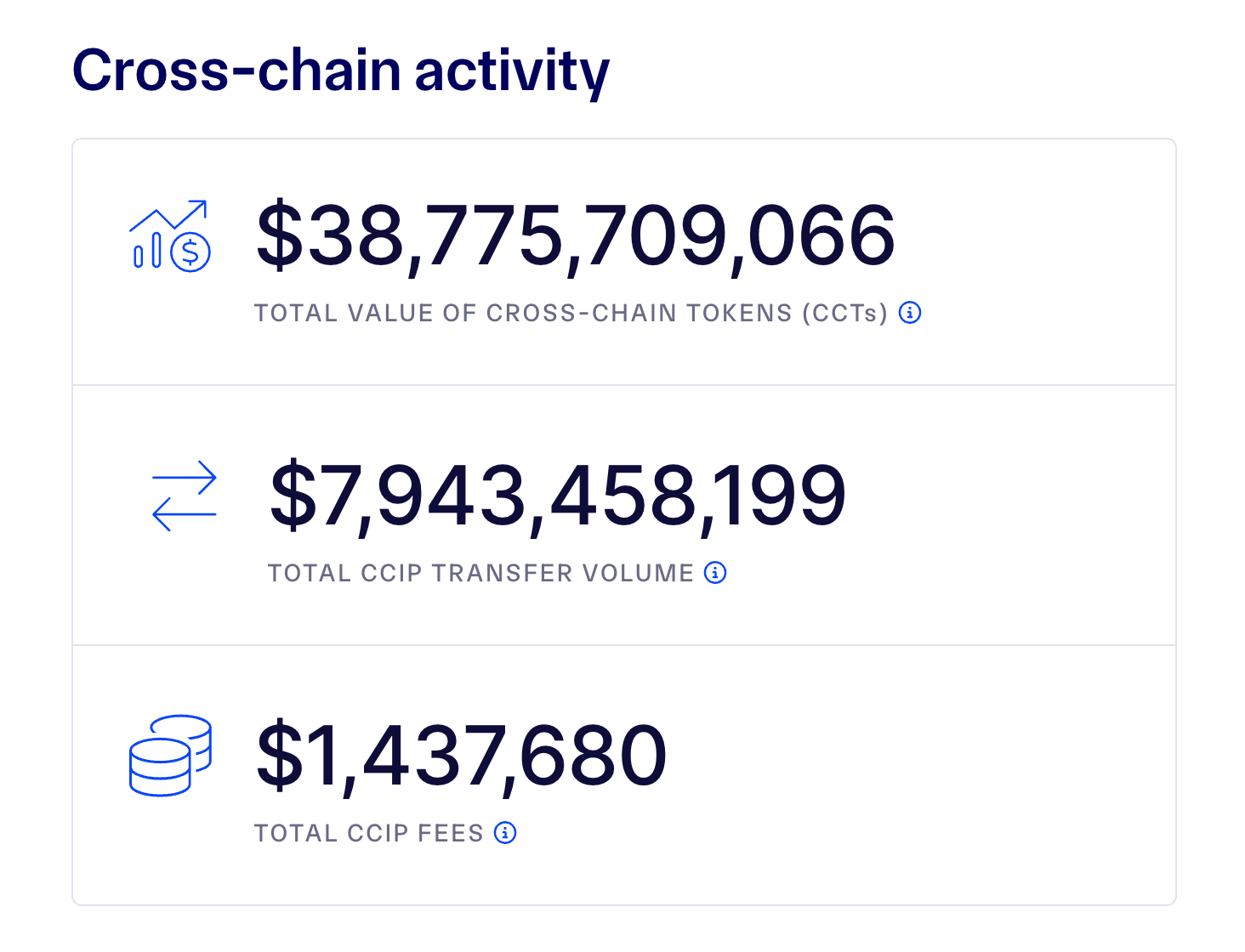
While ~200 tokens doesn’t sound like it’s much, the total value of those comes close to $39B, with total volume of cross-chain transfers near $8 billion.
Why Cross-Chain Tokens Matter
The CCT standard was created to solve two key problems in today’s blockchain landscape: liquidity fragmentation and developer dependence.
Liquidity fragmentation happens because every blockchain has its own isolated pool of assets. Tokens locked on one chain can’t easily move to another, dividing liquidity and limiting user access. CCT addresses this by allowing tokens to travel freely across multiple blockchains, maintaining a unified supply and consistent liquidity everywhere.
Developer autonomy is another motivation. Many token teams depend on external providers to make their assets cross-chain. CCT gives them the ability to do it themselves. By offering a permissionless deployment model, CCIP lets projects expand into any supported network without waiting for third-party integrations or bridge approvals.
How the Standard Works
When a token adopts the CCT standard, it connects to Chainlink’s network of oracles and on-chain contracts that manage secure token movement.
Despite the system being complex, it’s simple for developers and even simpler for end users, as Chainlink nodes handle most operations.
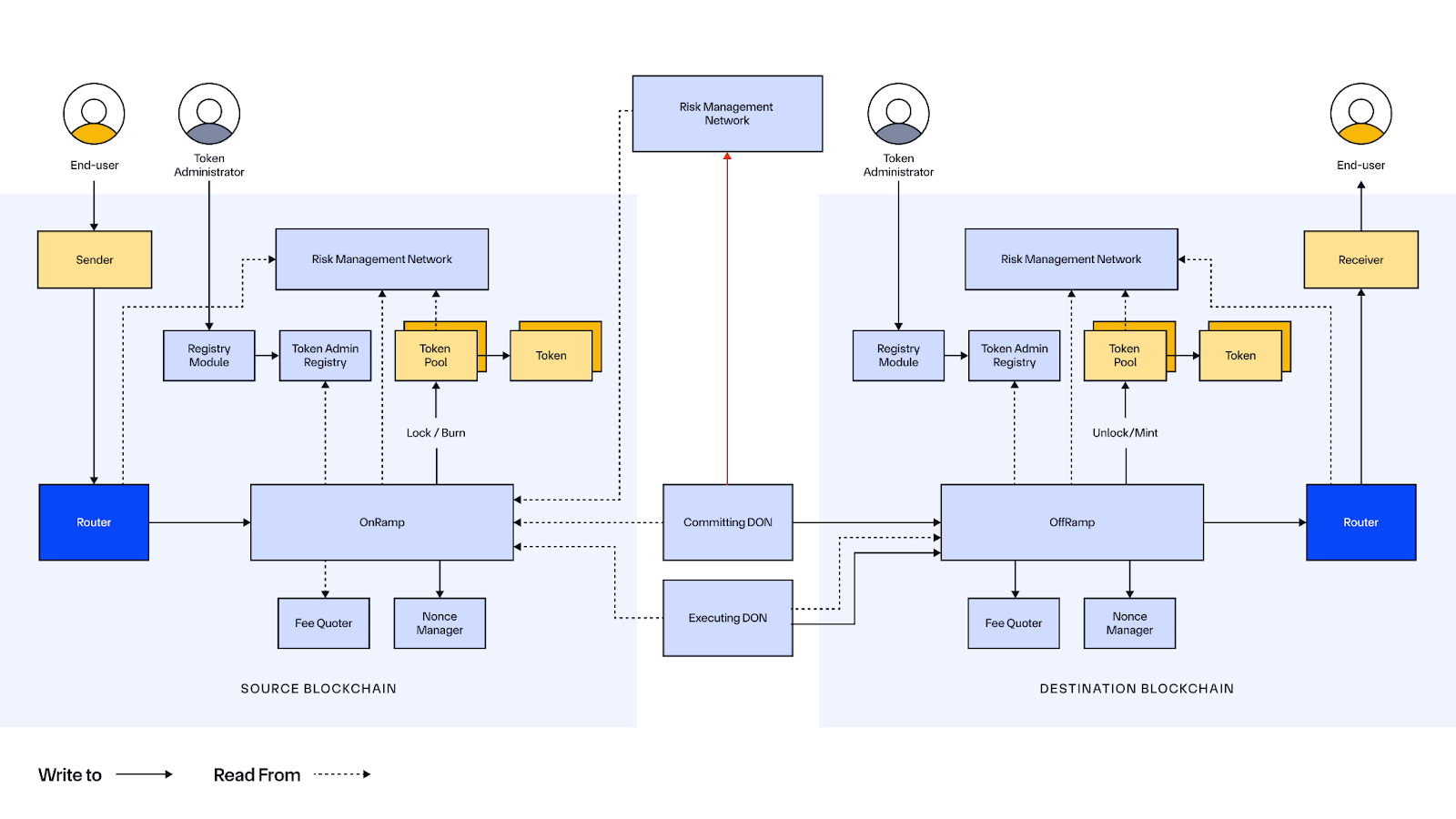
Each token is linked to its own token pool, which defines how transfers are handled between source and destination chains. These pools execute one of four mechanisms depending on the token’s design:
- Burn and Mint: tokens are burned on one chain and minted on another
- Lock and Mint: tokens are locked on the source chain and wrapped versions are minted on the destination
- Burn and Unlock: tokens are burned on a non-issuing chain and released on their home chain
- Lock and Unlock: tokens are locked on one chain and unlocked on another
This system ensures that total supply remains consistent while allowing fluid movement across networks.
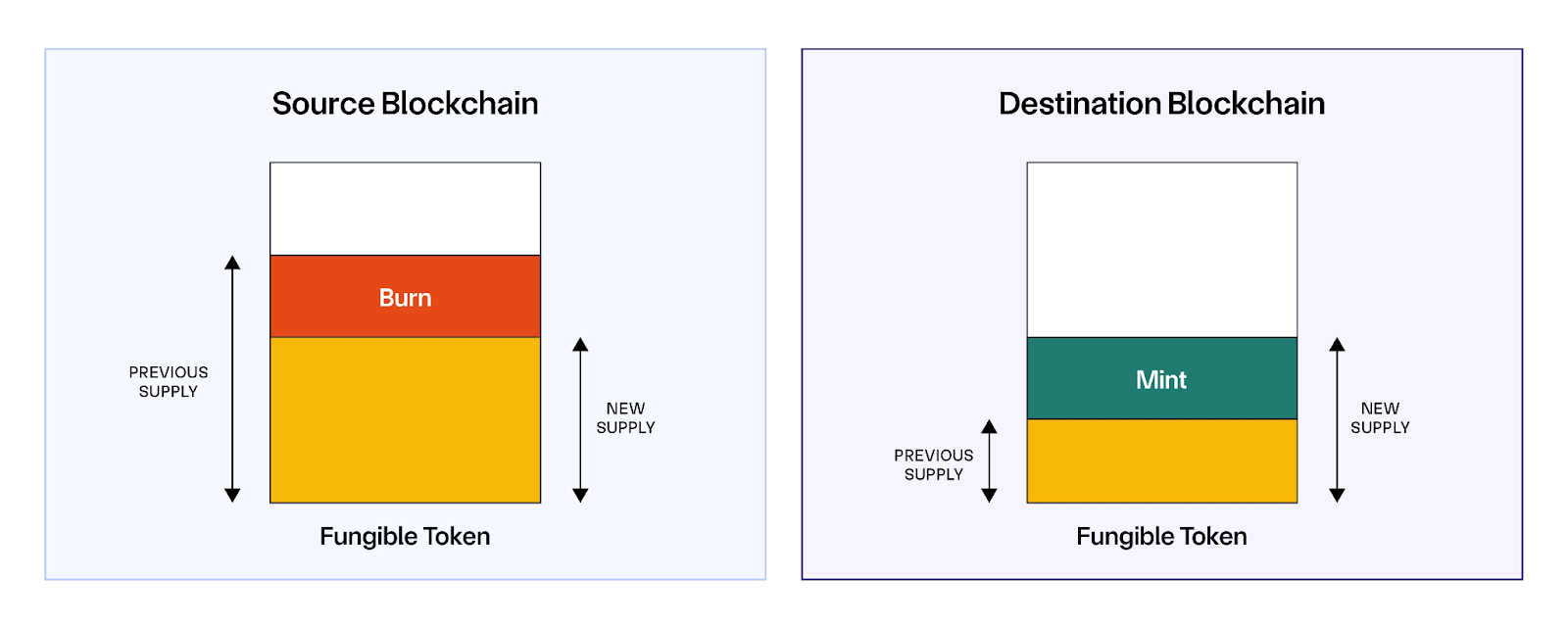
Developers can configure rate limits to control how much liquidity moves per time period, further strengthening operational security.
Distinguishing Features of CCT
Chainlink Cross-Chain Token standard has a few benefits that distinguish it from standards built by other teams.
- Self-service deployment: Developers can enable cross-chain functionality for a new or existing token within minutes. The system handles minting, burning, and locking processes automatically through audited contracts.
- Developer control and flexibility: Token teams retain ownership of their contracts, token pools, and logic. They can manage rate limits and upgrade pools without relying on external vendors.
- Defense-in-depth security: CCIP leverages Chainlink’s oracle network, which secures over $16 trillion in value, alongside a Risk Management Network that continuously monitors cross-chain activity to spot and stop suspicious activity.
- Programmable transfers: CCT supports sending tokens and messages together in one transaction. For example, a transfer can trigger staking or a contract call on the destination chain, meaning fewer actions required from end users and more complex use cases for devs.
- No liquidity pools required: Because CCIP handles transfers through minting and locking mechanisms, developers don’t need to manage fragmented liquidity pools or market-making infrastructure on all chains they want to have their token on.
- Zero-slippage transfers: The exact number of tokens sent on one chain is always the same number received on the other, ensuring transparent and predictable cross-chain operations.
The Broader Impact
The CCT standard moves blockchain interoperability toward real-world usability. It replaces ad-hoc bridges with a unified, auditable, and permissionless system that any developer can use. By combining security, autonomy, and programmability, it allows tokens to become truly multi-chain assets without sacrificing safety or liquidity efficiency.
As adoption grows, the Cross-Chain Token standard is set to become a core component of decentralized finance infrastructure, creating a future where tokens can move seamlessly between networks while remaining secure, consistent, and under full developer control.


.png)

.png)


.jpg)


.webp)