

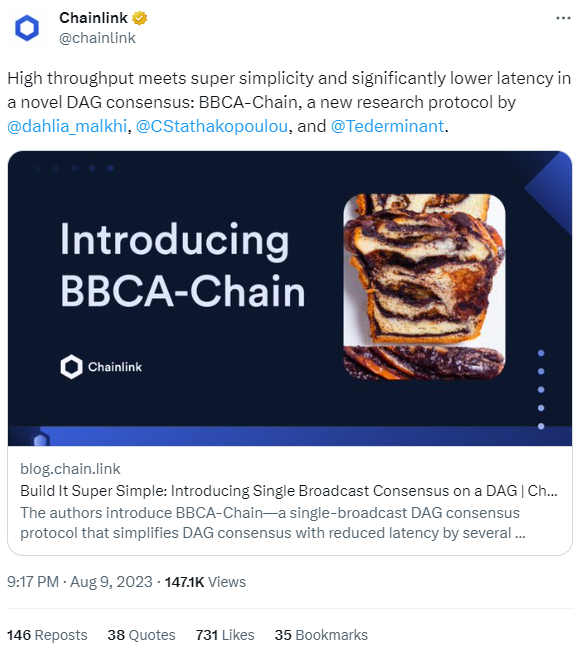
BBCA Chain and Chainlink are two separate blockchain projects, and they are not direct competitors or part of the same project.
Chainlink Labs Research team contributed to developing Directed Acyclic Graph networks and proposed a BBCA — fast and simple consensus process in distributed systems. This protocol can be used by other DAG-based networks that require a more efficient consensus mechanism.
On the other hand, Chainlink is a distributed oracle network. Chainlink does not need its blockchain; instead, it provides the ability for blockchains to use external data in their smart contracts.
Thus, BBCA Chain and Chainlink connection does not mean Chainlink wants to launch its chain. Or does it?
What are DAG and BBCA
Before delving into BBCA, it’s essential to grasp the foundation it is built on. DAG, or Directed Acyclic Graph, is the backbone for data transmission. Nodes broadcast messages with transactions, store the messages they receive and sort received transactions causally based on previous messages they store. Eventually, all nodes sort the transactions correctly so no spending occurs before receiving.
While only one validator can propose a block in blockchains, in DAG-based chains, anyone can propose one. This feature enhances the throughput but complicates the consensus mechanism.
DAGs need a consensus mechanism to dismiss dishonest blocks and add only valid ones. There are many takes on implementing a DAG BFT, and most of them aren’t fully utilizing the throughput, as voting and consensus layers add latency.
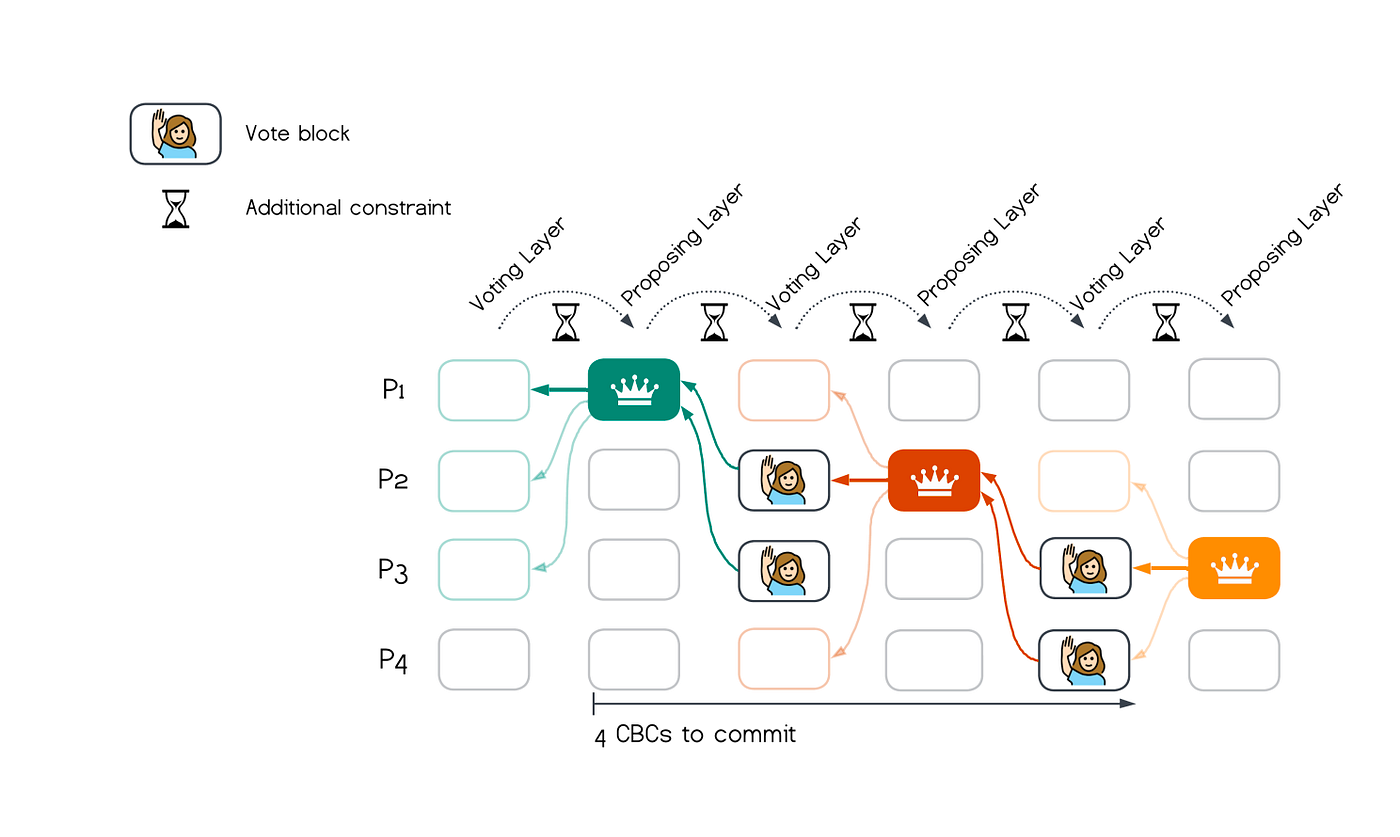
E.g. Bullshark consensus algorithm implemented in Sui has to do 4 broadcasts (CBCs) to adopt a block. Consider that each broadcast takes 500 ms, and there you have up to 2 seconds of latency.
BBCA Chain erases additional voting and proposing layers. The chain leader broadcasts the block via Byzantine Broadcast with Commit-Adopt (thus BBCA in the name) — a new primitive that allows the validator to peek into the DAG, check the block validity locally, and adopt it without messaging other validators. This trick eliminates the time-consuming voting and consensus layers, reduces latency, and reduces protocol complexity.
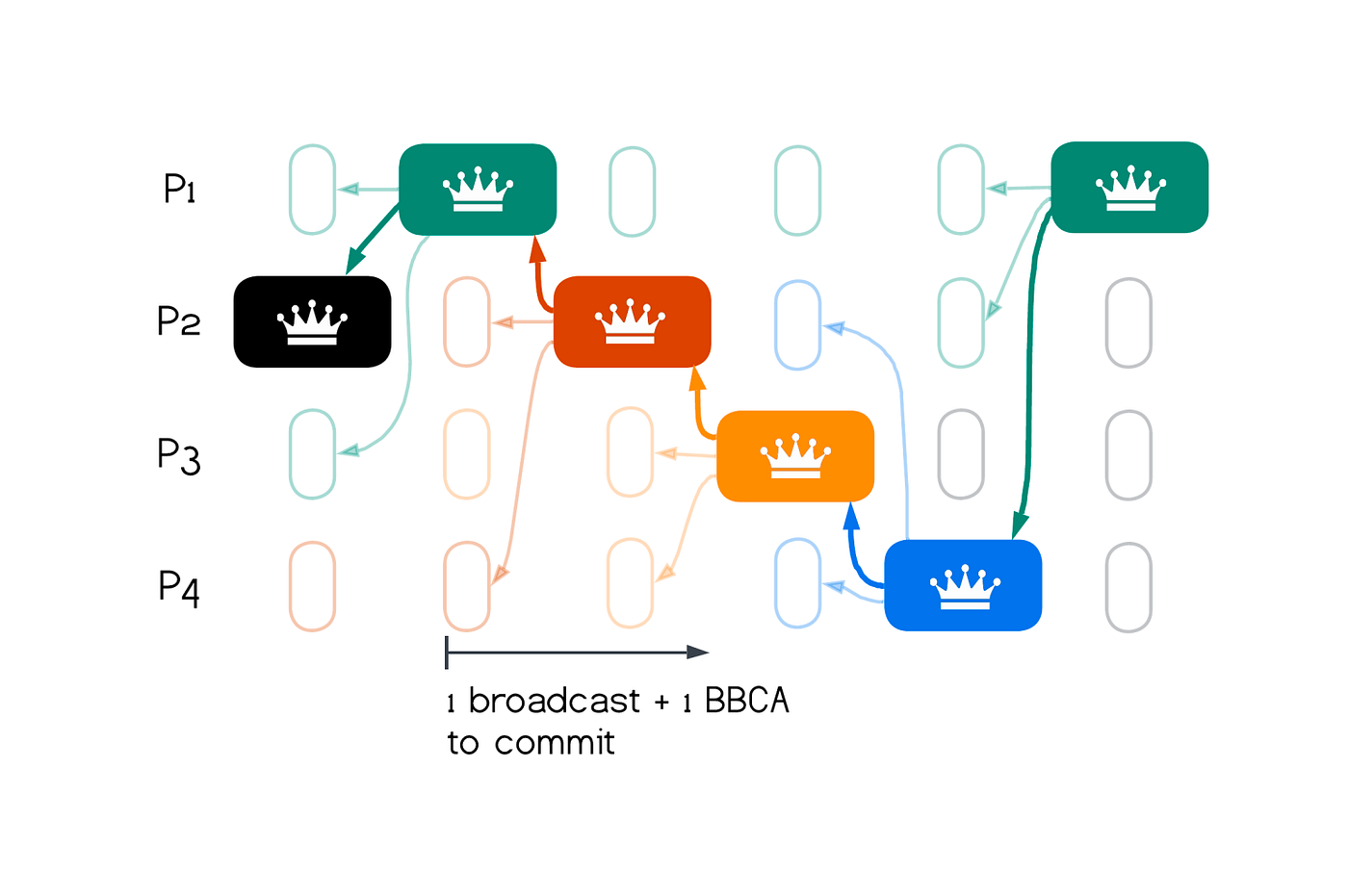
Leader-blocks use BBCA, while regular blocks use simple best-effort broadcast. As long as the majority of validator nodes are honest, the BBCA Chain remains secure, just like a regular Byzantine Fault Tolerance PoS Chain.
It is a very simplified explanation. There is a lot of cryptography and math behind BBCA Chain. If you understand math, programming, and DAG-riding distributed networks, we encourage you to read the original article explaining it.
Is Chainlink creating its blockchain?
It is a project by Chainlink Labs Team members. The BBCA Chain’s code is private and no networks are running on it now.
Chainlink itself does not need a separate network, but a BBCA Chain can become an L0.5 chain, acting as an intermediary for atomic operations between various blockchain networks. This application can potentially enhance BBCA Chain’s capabilities in the realm of consensus and cross-blockchain interactions.
Summary
BBCA Chain and Chainlink are distinct projects in the blockchain world. BBCA Chain offers a streamlined consensus mechanism based on a Directed Acyclic Graph (DAG), while Chainlink specializes in oracles and data integration. They can function independently, but there’s potential for collaboration in the future, enhancing decentralized oracles and cross-chain operations. So, let’s see!


.png)

.png)


.jpg)


.webp)