


In 2025, Chainlink expanded its reach by making the Cross-Chain Interoperability Protocol (CCIP) available for non-EVM networks, moving closer to a truly chain-agnostic standard and cross-domain messaging layer.
While this clearly accelerates CCIP adoption, since more projects and assets can now connect to it, this expansion also signals something bigger. Chainlink is preparing for a future where global finance uses digital assets with their private ledgers very different from blockchains we know.
In this article, the Deepbase team shares key ideas and facts about CCIP expansion across Web3 ecosystem, institutions and central banks usage of distributed ledgers instead of blockchains, and CCIP fitting into institutional requirements to connect their ledgers and public chains.
A Brief History of CCIP Expansion
CCIP launched in July 2023 with Mainnet Early Access on Ethereum, Avalanche, Optimism, and Polygon, which were among the most active EVM networks at the time.
In 2024, the v1.5 upgrade scaled token integrations through the Cross-Chain Token (CCT) standard and opening the general availability. This helped developers integrate CCIP more easily and make their assets transferable across chains. However, CCIP still remained EVM-only.
In May 2025, CCIP v1.6 expanded support to non-EVM blockchains, starting with Solana. The same release introduced architectural upgrades designed to simplify integration for additional chains.
Today, Ethereum and its connected L2 ecosystem remain the largest liquidity hub, with $500B+ in TVL as of January 2026. But non-EVM networks matter too. Solana has around $23B in TVL and about $48B in bridged assets. TRON holds roughly $80B in stablecoin supply. Other chains may be smaller, but they still contribute unique advantages, such as high-throughput execution, protocol-level gas abstraction, or distribution through messenger platforms.
From a strategic viewpoint, enabling CCIP on every viable chain is the smartest move. It allows Chainlink to capture a large share of existing cross-chain activity and proves that CCIP can abstract different execution models, with expansion being a capability building, not just ecosystem chasing.
Why non-EVM Expansion is an Institutional Move
DeFi developers go where liquidity and users already exist. Ethereum, BNB Chain, Base, Solana, and TRON are obvious examples. But institutions are not bound by on-chain liquidity, because their liquidity lives off-chain.
What institutions need is not “another chain.” They need a reliable way to connect to public blockchains while keeping operations secure, automatable, and compatible with internal controls.
That is why institutions are unlikely to standardize on EVM alone. Instead of building another EVM L1 or L2, they will likely use what suits their needs, including custom virtual machines and private distributed ledgers. Expanding CCIP to non-EVM chains gives Chainlink the engineering practice needed to integrate with those enterprise-built environments later.
Institutions already use private ledgers that are nothing like public chains
Private DLT systems are very different from what most crypto users think of as “a blockchain.” Instead of using Ethereum, Solana, or TRON virtual machines, institutions often choose custom ledgers optimized for privacy, governance, and workflow coordination.
R3 Corda
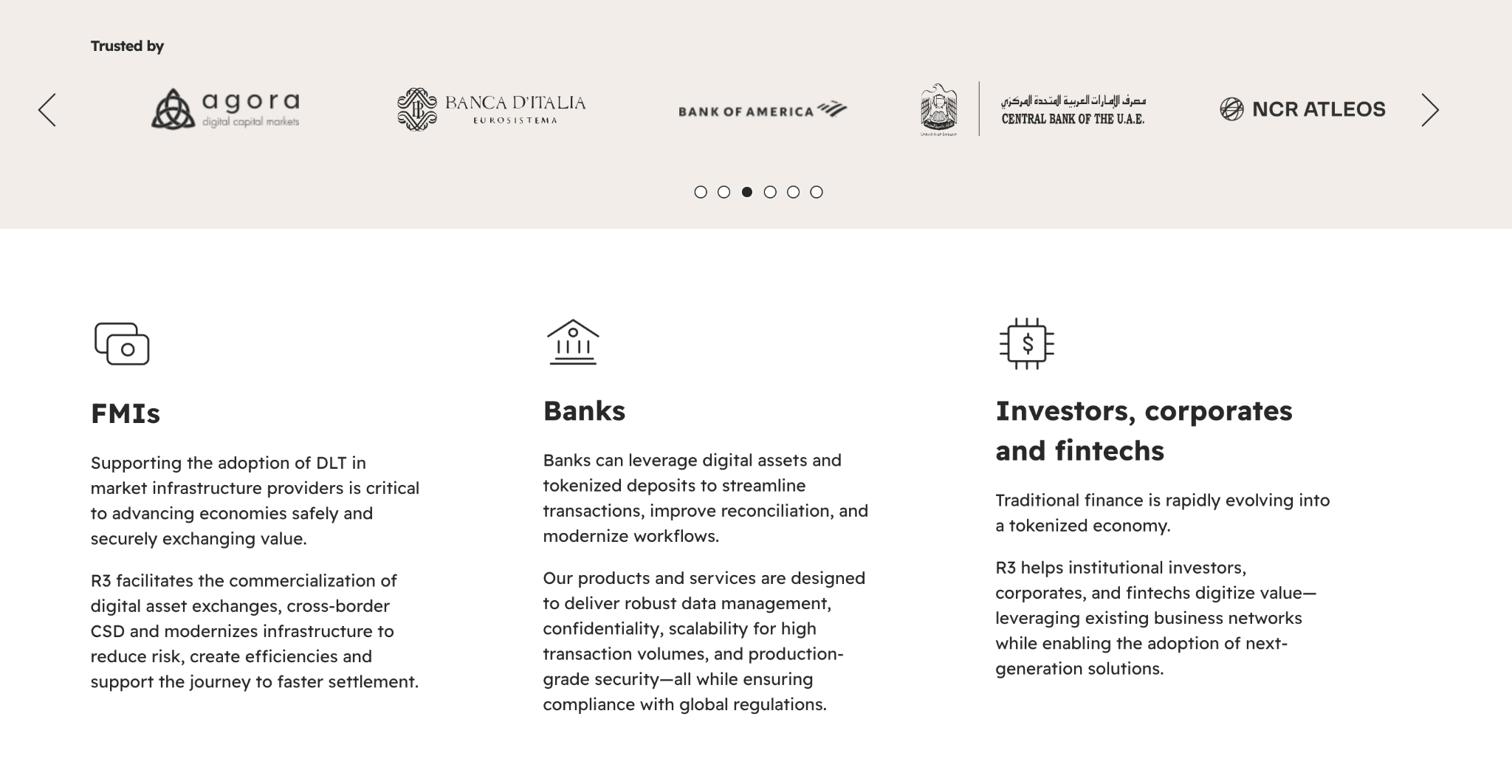
Corda is used by institutions like Euroclear, Central Securities Depositary Prague, Bank of America, Central Bank of the U.A.E., HSBC, BNP Paribas, ING, NatWest, Standard Chartered, Commerzbank, OP Financial Group, Bangkok Bank, and others. It differs from EVM in key ways.
- It does not use a global shared state machine.
- Only the sender, recipient, and invited observers can see the transaction.
- “Smart contracts” validate transactions, rather than storing state in a global ledger.
Hyperledger Fabric
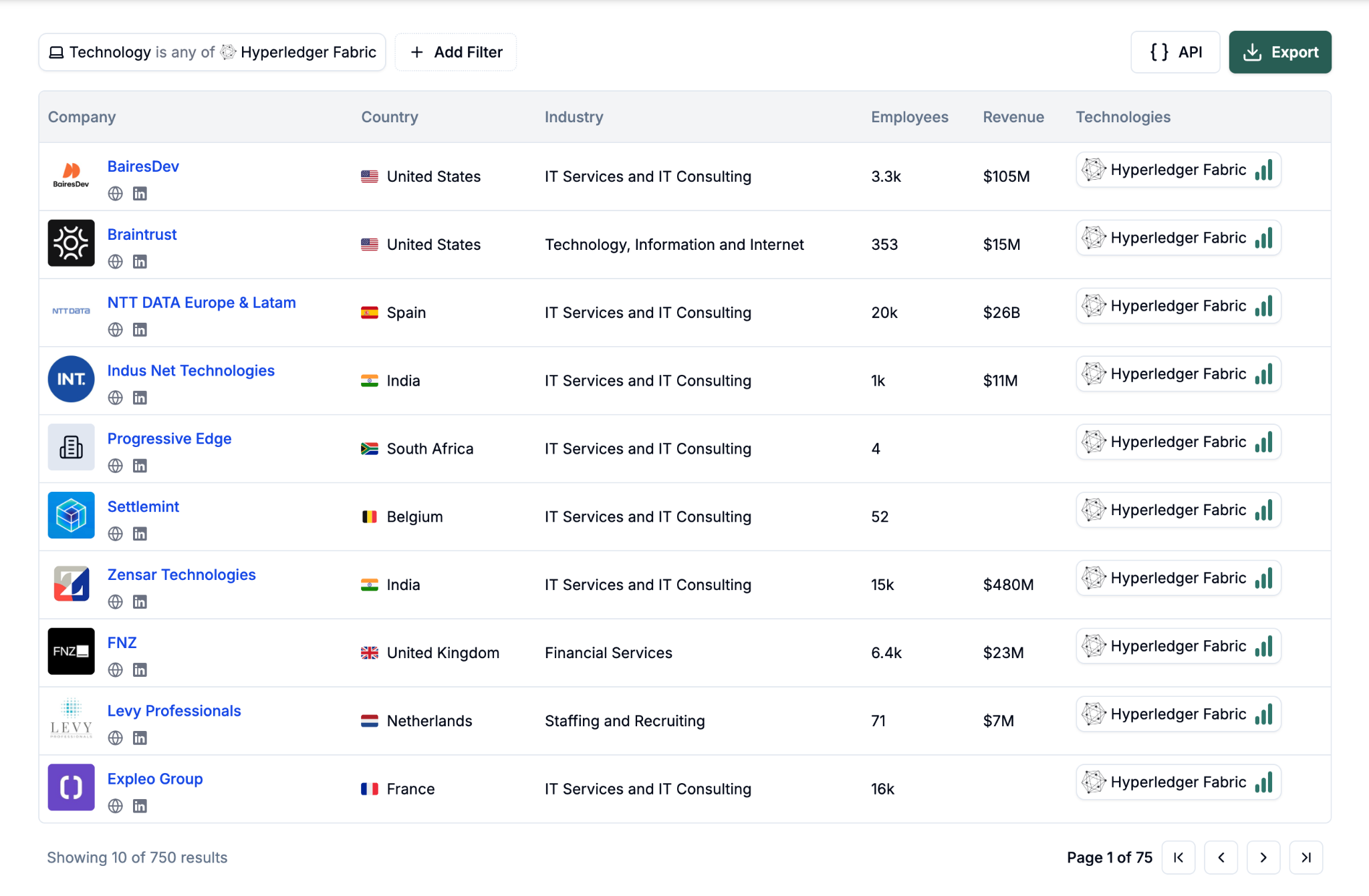
Fabric has been used by 700+ clients, involving Deutsche Bank, HSBC, Santander, Société Générale, UBS, UniCredit, Rabobank, Erste Group, and more.
- Smart logic (chaincode) is executed by endorsing peers rather than by all nodes.
- It supports private transactions through channels and private data collections.
- Identity, endorsement, and governance policies are protocol-native.
- It is built for consortium ledgers where many enterprises share one controlled network.
Canton
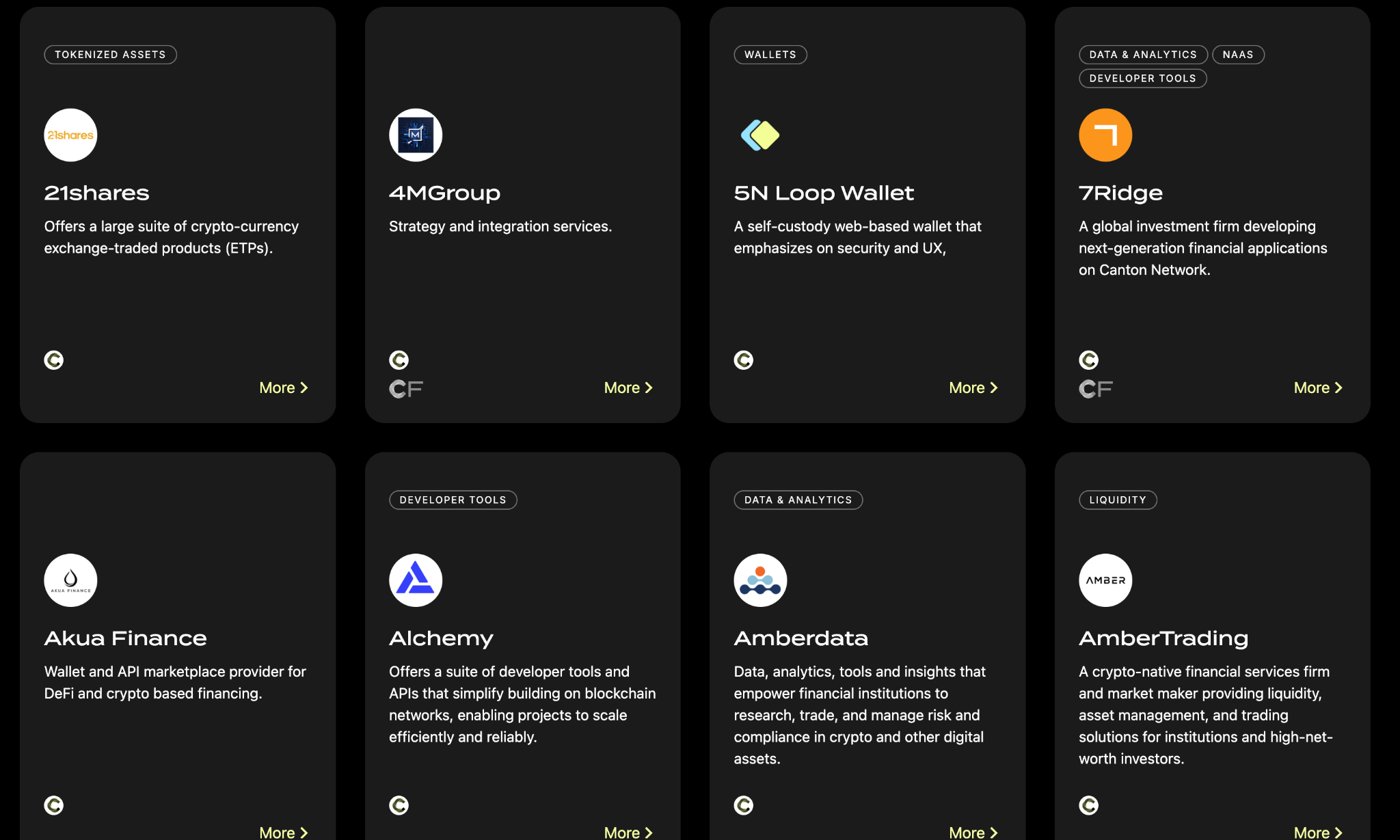
Canton is used by 200+ customers like Goldman Sachs, BNP Paribas, Deutsche Börse Group, Cboe Global Markets, Moody’s, S&P Global, Paxos, Microsoft, and others.
- It is a network of privacy-preserving ledgers operated by institutions.
- It uses DAML workflows, where contracts represent rights and obligations and are hidden from uninvolved parties.
- Multiple participants can share interoperable ledgers without exposing all data globally.
These are very different from EVM and non-EVM chains just by having no global state. The data is under strict read/write control and devs have to adapt to this factor.
Why institutional workflows require cross-chain messaging?
They will need it just as they need SWIFT messages for coordinating multi-step processes across different systems with every step provable and ordered.
For example, first ledger can hold the asset record, second one holds the cash leg, and the third is responsible for compliance. Cross-chain messaging will make them work together in one workflow.
But CCIP is more that just messaging: while SWIFT coordinates instructions, CCIP also coordinates execution and verification, making it a more preferred layer. It will be the best choice for subscription and redemption for tokenized funds, delivery versus payment settlements, collateral movement, margin workflows, corporate actions, cross-border and multi-network asset distribution, proof of reserves, and other workflows that involve execution of any kind.
Institutions can establish their own bridges, but CCIP will be superior with:
- One interface and standard for transferring messages, moving assets, and triggering workflows through all chains and ledgers.
- Lane-based configuration for explicit routes and rules for compliance.
- Programmable messages instead of simple asset transfer.
- Robust security and data verification model with full decentralization.
- Auditability to for simple operation tracking.
CCIP can be adapted to private ledgers, but the challenge is different
In theory, CCIP can be adapted to work with institutional ledgers, similarly to how it integrates with public chains. It can bridge messages and assets between private environments and public blockchains.
However, the differences are significant. Private ledgers rely on applications and workflows rather than on globally executed smart contracts. They also use different consensus and finality models.
Privacy is another key challenge. These ledgers do not expose transaction data to the entire network. So bridging value or instructions with CCIP while preserving confidentiality becomes a core requirement. This is where Confidential Compute becomes essential.
Automated compliance will also matter. When a private ledger participant bridges an asset to a public chain address, compliance rules must be enforced before settlement. Chainlink Automated Compliance Engine (ACE) could support eligibility checks, transfer restrictions, and reporting, while ensuring clean audit trails for regulated operations.
Conclusions
CCIP is not expanding beyond EVM to chase ecosystems, but in preparations to become ledger-agnostic infrastructure for global finance.
Supporting non-EVM chains forces CCIP to operate across different execution models, finality assumptions, and data structures. That flexibility is required to integrate with ledgers used by institutions today.
Public non-EVM chains are the proving ground and private DLTs are the next step. The future of global finance is closer than we think.


.png)

.png)

.jpg)


.webp)