

There are many web errors everyone knows, like “404 Not Found” or “403 Forbidden.” But some status codes have rarely been encountered, like “402 Payment Required,” which was quickly forgotten after being added to the HTTP standard.
In a twist of internet history, 402 is now being revived with a Web3 payment protocol called x402. It’s a solution brought by Coinbase for simple paywalls with one-time crypto payments, which also got attention from Chainlink.
We at Deepbase studied how it works and are ready to explain the mechanism of x402, its features, and potential use cases.
What Is the x402 Payments Protocol
According to the HTTP 1.1 specification, websites can respond with a “402 Payment Required” status. This code was reserved over 30 years ago alongside other HTTP status codes, with the assumption that the web would eventually support a common paywall interface—but it was never used in practice.
In 2025, Coinbase reintroduced the idea as a new open, web-native payment standard under the name x402. It has since attracted interest from Cloudflare, Google, Visa, and other industry players, signaling strong potential for adoption across the web.
So, How Does x402 Work?
When you visit an x402-enabled website, the server responds with payment terms: amount, token type, network, and destination address. A compatible wallet interprets these terms into a regular transaction that the user can approve or reject. If approved, the payment is executed, and a signed receipt is returned to the website. The site then verifies the payment and grants access to the requested content.
The concept is simple: receive a check, pay it with crypto, submit a receipt, and get access—much like scanning a paid parking ticket before exiting a lot.
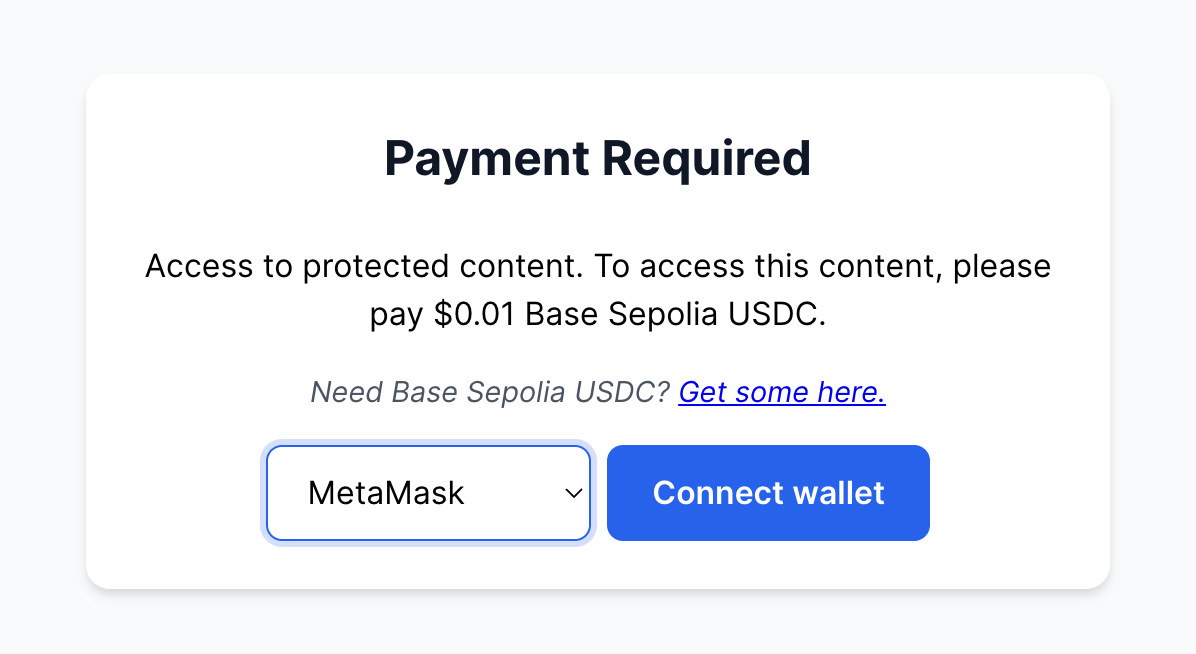
If integrated with Chainlink’s Cross-Chain Interoperability Protocol (CCIP), payments within x402 can be made with various tokens on supported chains. For example, a website may request USDC on Base, while the user only holds ETH on Ethereum. CCIP automatically handles the swap and completes the payment in the background.
Why x402 Is Good for the Web3 Ecosystem
Implementing online fiat payments typically requires complex setup, acquiring agreements, and dealing with settlement delays of two to three working days. It’s difficult, slow, expensive in fees, yet widely used because nearly every internet user has a credit card.
Web3 payments are more direct and immediate, allowing merchants to receive funds almost instantly. However, setting them up remains challenging. Users often need to handle manual payments, including swapping and bridging tokens to match the requested network and amount. The x402 protocol offers the simplest integration possible: developers only need to add a single line of code with the recipient address, token amount, and target resource.
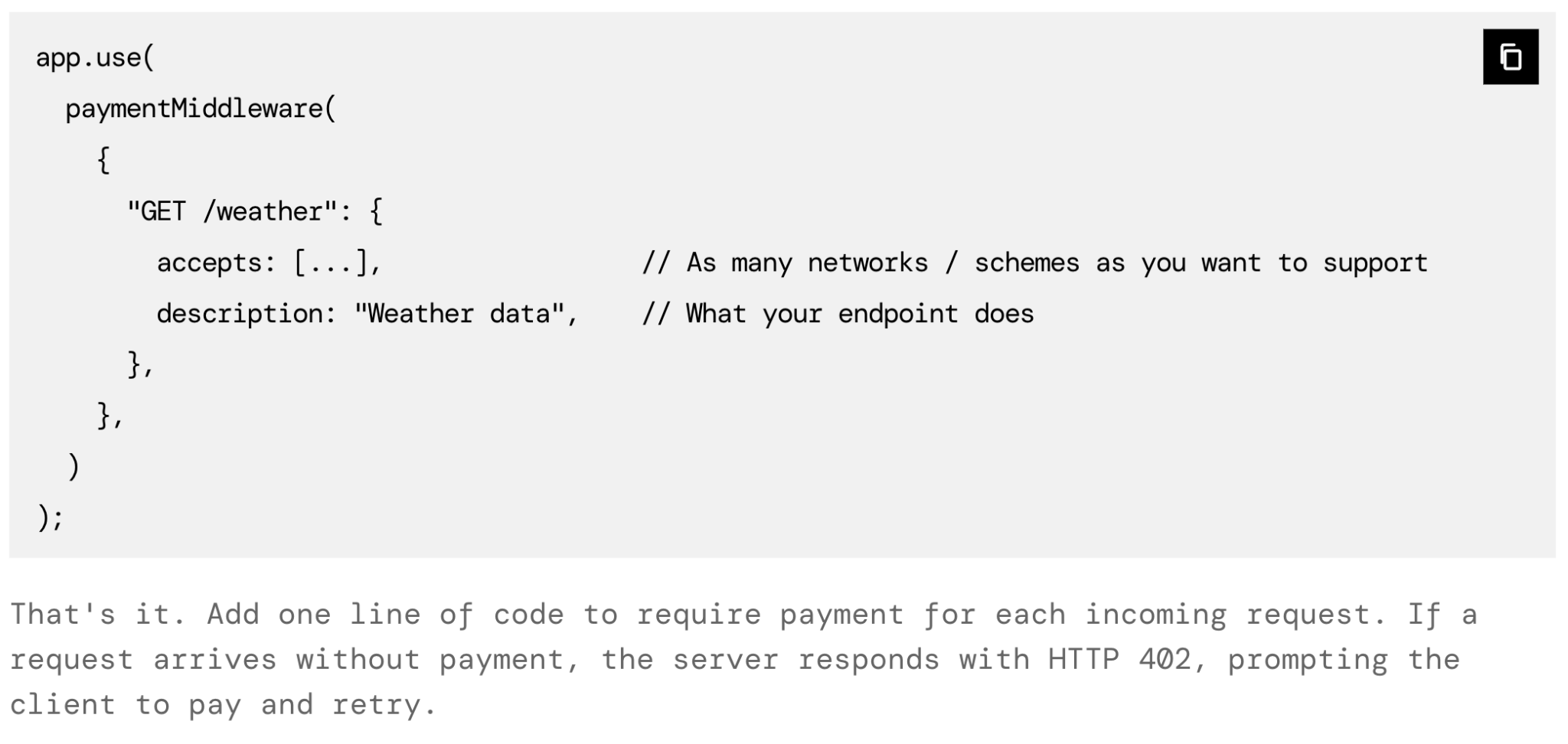
Additionally, x402 is far more convenient than traditional fiat systems. It supports payments as low as $0.01 with negligible fees (~$0.0001), whereas fiat rails often lead to confusing or hard-to-cancel subscriptions.
What Use Cases Are Unlocked with x402?
Coinbase was among the first to define x402 for API payments and launched a facilitator service on Base L2. This service validates signed receipts and executes corresponding transfers on-chain. Third-party developers can adopt x402 without maintaining their own infrastructure. Coinbase also provides Know Your Transaction (KYT) filtering to block illicit activity, with real-time dashboards for monitoring, making it suitable for all kinds of payments.
Chainlink has added a native support to x402 in Chainlink Runtime Environment (CRE), so that developers and AI agents can programmatically pay for and trigger CRE workflows using the x402 pay‑per‑use protocol.
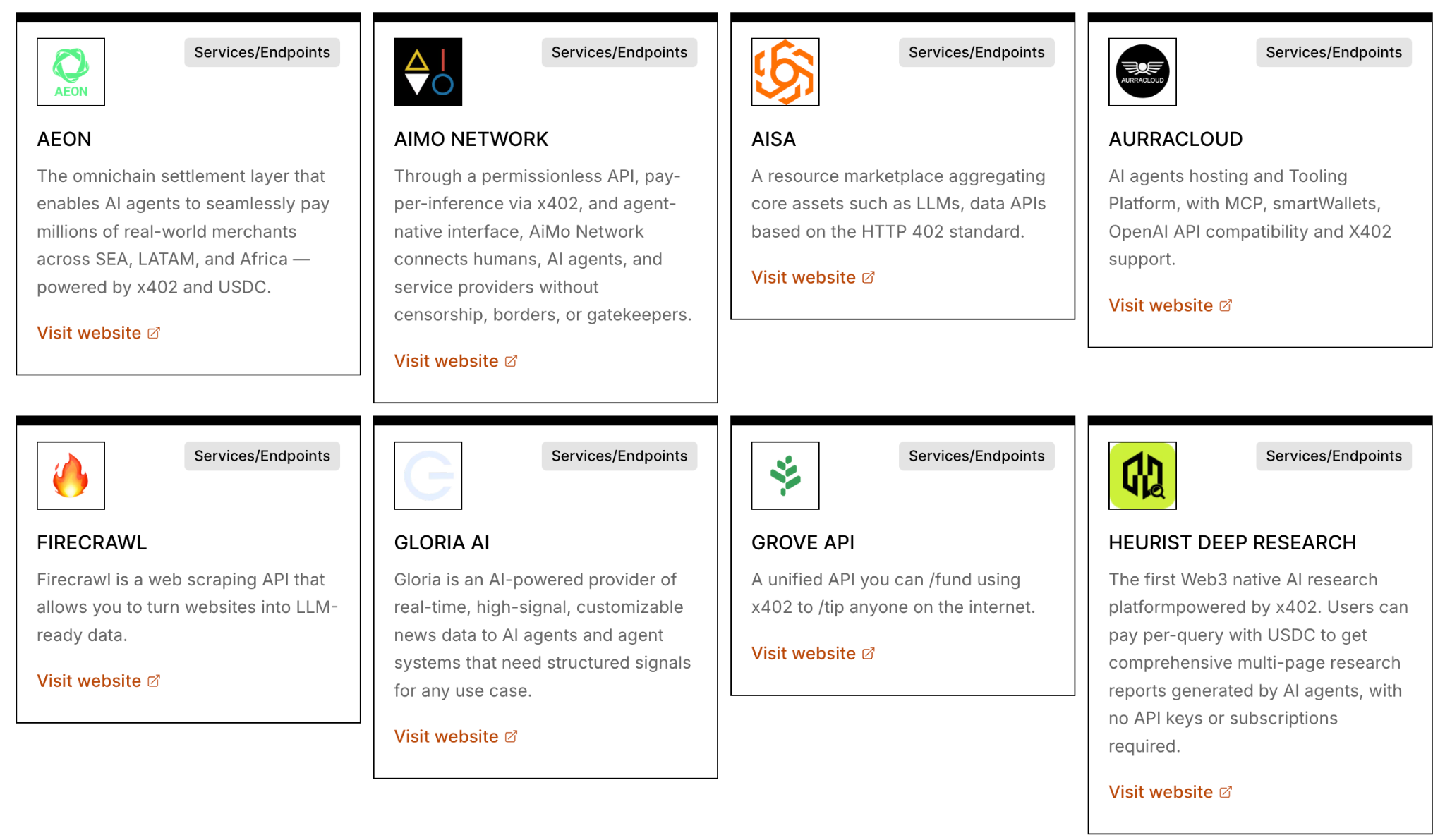
Currently, x402 is used by AI tools such as Virtuals, Questflow, Heurist, PayAI Network, and others for pay-per-use billing on tasks and data access. These services typically charge $0.01 per request, letting users access powerful or specialized AI models without committing to expensive subscriptions. This model increases the likelihood that users will agree to small, one-time fees instead of abandoning a service entirely after being proposed a monthly subscription.
Some practical applications include:
- On-demand image generation with per-image payments. Paying $0.001 per image makes more sense than buying “1,000 credits for $5.99 per month.”
- One-time document access for research papers, manuals, or rare books. Users pay only for the document they need, without subscribing.
- Access to rarely used but specific apps like video editing software or diagnostic tools. Paying a few cents instead of $100 subscription for temporary access could reduce piracy.
- Per-page reading on news sites, enabling users to pay only for the content they want, avoiding full subscriptions.
Nearly any Web2 service currently operating on a subscription model can adopt x402 to unlock new monetization streams and attract users with a simpler, usage-based payment model.
Conclusion
x402 takes a long-forgotten HTTP status code and transforms it into a practical Web3 protocol for simple crypto payments embedded into the core of internet functionality. It works without middlemen, is easy to implement and use, and unlocks more ways to create things on web and monetize these creations.
With Chainlink CRE, x402 unlocks simple pay-per-protocol-use on-chain automation. Potential CCIP integration with x402 can further reduce onboarding friction for users. Finally "pay with crypto" means you can pay with any of yours crypto, and not some specific token on a particular chain.
Who would have guessed that the next step for online payments will be an error code forgotten decades ago?


.png)

.png)

.jpg)


.webp)