

Deepbase is one of the first Chainlink node operators that started operating on Chainlink in 2018, and is happy to share the experience and knowledge about the largest decentralized oracle service in Web3.
Here, we will explain what Chainlink and LINK are, what services Chainlink provides, and which decentralized apps and traditional financial institutions use Chainlink.
What is Chainlink
Chainlink is a decentralized oracle network that connects blockchain smart contracts to real-world data and systems. In other words, it’s the “chain-link” between blockchains and off-chain information. Its architecture consists of many decentralized oracle networks (DONs), each made of multiple Chainlink nodes run by independent node operators.

These node operators — which can be telecoms, data providers, or infrastructure teams — fetch data (like price feeds or weather info), perform any needed computations, and relay the results to smart contracts. This decentralized setup prevents single points of failure: instead of one source, many oracles reach consensus on data and submit it on-chain, making the data tamper-resistant and reliable.
What is LINK Token
Chainlink’s native cryptocurrency is called LINK. Developers pay for oracle services (data feeds, randomness, etc.) with LINK, and node operators earn LINK as compensation.
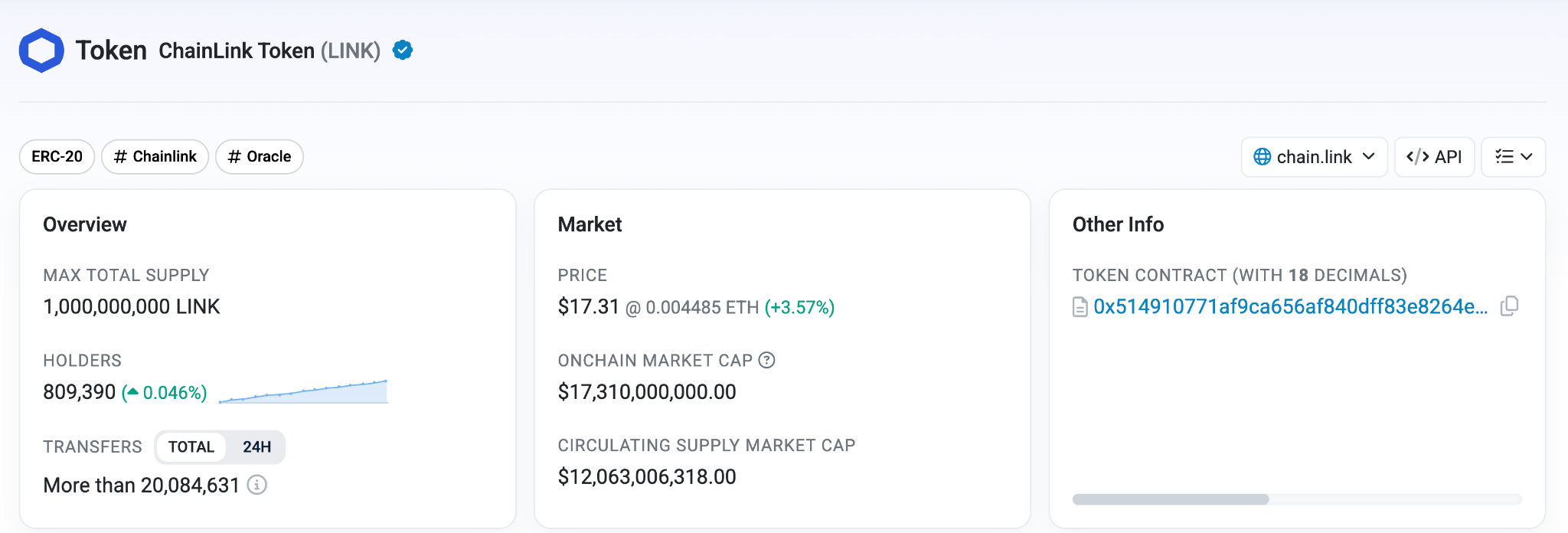
LINK is also staked by operators as collateral: they lock up LINK to run oracles, ensuring honesty. Node operators set fees and get paid in LINK for each job. LINK holders can also stake their tokens to help secure the network and earn rewards. In summary, LINK underpins the economy of the Chainlink network — it’s how services are paid for and how honest operation is incentivized.
Chainlink Services
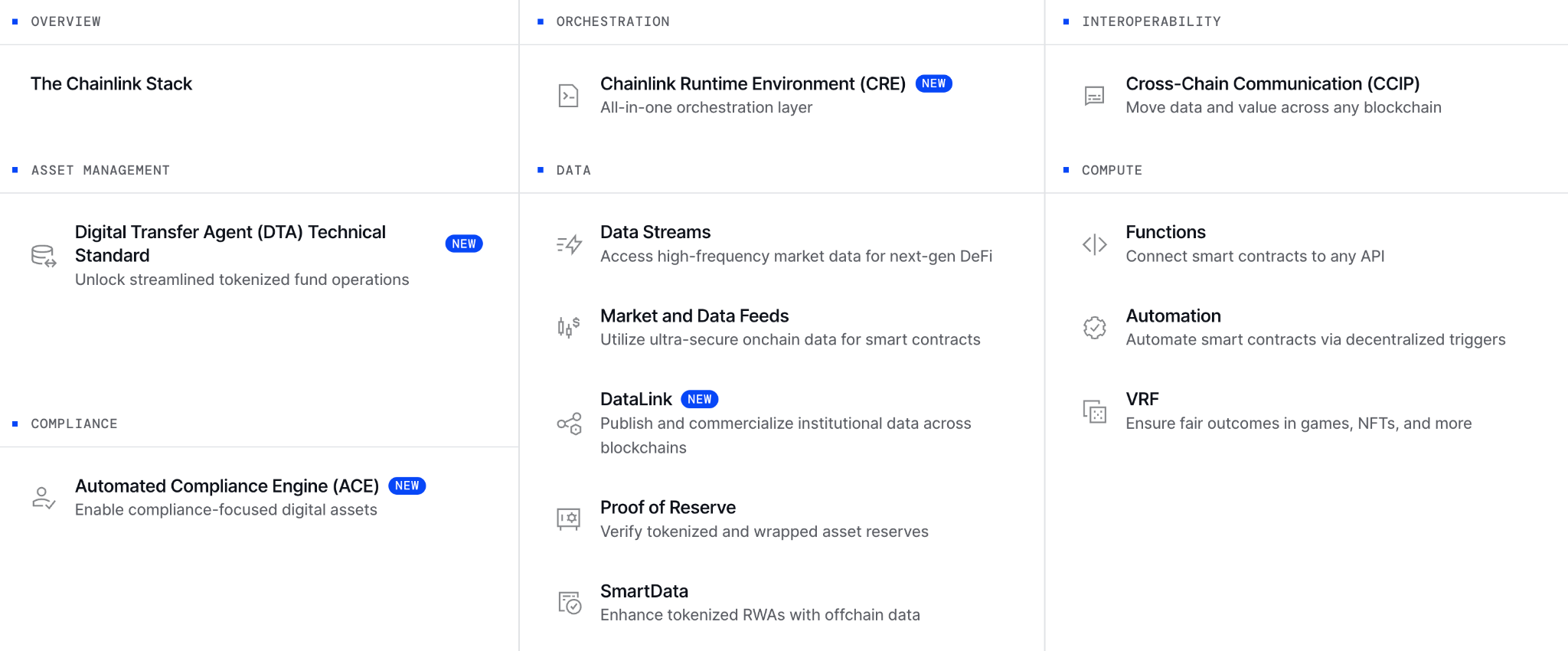
Chainlink offers many services beyond simple price feeds, for example:
- Chainlink Data Feeds and Price Feeds: On-chain reference contracts that regularly publish aggregated data like cryptocurrency prices or interest rates. These are “push-based” oracles securing trillions in DeFi value.
- Chainlink Data Streams: A low-latency, pull-based oracle for high-frequency data. It delivers sub-second market data (e.g. real-time price ticks) off-chain that contracts can verify on-chain. Data Streams power ultra-fast DeFi products like perpetual futures.
- Chainlink Cross-Chain Interoperability Protocol (CCIP): A standardized protocol for secure messaging and asset transfers across different blockchains. CCIP lets chains talk to each other; it’s being adopted by top networks and institutions to enable cross-chain DeFi.
- Chainlink VRF (Verifiable Random Function): A provably-random number generator for smart contracts. VRF provides tamper-proof randomness (e.g. for gaming, lotteries) with cryptographic proof.
- Chainlink Automation (Keepers): A service for reliable on-chain automation. It can trigger contract functions (like liquidations or rebalancing) when conditions are met, using decentralized oracle monitoring.
- Chainlink Functions: A serverless oracle solution. Developers can write off-chain computations or API calls in one transaction, without running their own node.
- Chainlink Proof of Reserve: On-chain reserve auditing. This service publishes real-time reserve data (e.g. collateral backing stablecoins or wrapped tokens) so apps can verify assets are 1:1 backed. It acts as an “automated, tamper-proof reserve monitor” for stablecoins and tokenized assets.
Top 5 DeFi Apps Using Chainlink
- Aave — One of the largest decentralized lending platforms on Ethereum and multiple other chains. Aave uses Chainlink Price Feeds to determine the value of collateral and borrowed assets. These feeds ensure accurate pricing for loan-to-value ratios and protect the protocol from manipulation during liquidations.
- Compound — A leading algorithmic money market protocol. Compound integrates Chainlink oracles to fetch real-time prices for supported assets. This allows Compound to precisely calculate collateral factors, interest rates, and liquidation thresholds without relying on centralized data sources.
- Synthetix — A derivatives liquidity protocol enabling the creation of synthetic assets. Synthetix relies heavily on Chainlink’s Price Feeds to track the value of synthetic assets like sUSD, sBTC, and sETH. Chainlink ensures that these assets maintain correct peg ratios relative to their real-world counterparts.
- GMX — A decentralized perpetual and spot exchange operating on Arbitrum and Avalanche. GMX uses Chainlink’s low-latency market data and Price Feeds to maintain accurate mark prices for leveraged trading. This integration ensures that traders experience fair execution and liquidation during volatile market conditions.
- Liquity — A decentralized borrowing protocol that issues LUSD, a stablecoin backed by ETH. Chainlink provides ETH/USD price data to maintain precise collateral ratios and enable automatic liquidations when necessary. Liquity’s reliance on Chainlink ensures stability and transparency in its liquidation mechanism.
Top 3 CeFi Institutions Using Chainlink
Chainlink is also being adopted by traditional finance (CeFi) players. Three notable examples:
- Mastercard: In 2025, Mastercard partnered with Chainlink to enable over 3 billion cardholders to buy crypto directly on-chain. This collaboration brings Chainlink’s secure interoperability to Mastercard’s global payments network.
- SWIFT: The global interbank messaging network (used by 11,500+ banks) has worked with Chainlink (alongside UBS Asset Management) on tokenized fund settlement. SWIFT+Chainlink integration allows tokenized assets to move using existing SWIFT rails.
- DTCC (Depository Trust & Clearing Corporation): The world’s largest securities depository processes over $2 quadrillion annually. DTCC collaborated with Chainlink to make fund NAV data available across blockchains. Using Chainlink CCIP, DTCC can publish real-time asset values on any chain, automating fund services.
Conclusion
Chainlink has become a critical piece of infrastructure for both crypto and traditional finance. It powers secure data, randomness, automation, and cross-chain liquidity for top DeFi and CeFi projects. As the Chainlink docs explain, “Operating a Chainlink node allows you to be part of the Chainlink network, helping developers build hybrid smart contracts, giving them access to real-world data and services”.
Deepbase is proud to be one of those node operators. By running a Chainlink node, we contribute to this decentralized oracle network and help bring reliable, on-chain data to the next generation of blockchain applications.


.png)

.png)


.jpg)

.webp)